Airgun Suppressors Legal? What You Need to Know
If you’re researching quieter shooting setups, one of the first questions that comes up is whether airgun suppressors legal in your area.
The answer is not always straightforward.
Laws vary depending on country, state, and even how the device is classified. While airguns themselves are often less regulated than firearms, suppressors can fall under completely different legal frameworks.
In this guide, we’ll break down what you need to know so you can understand the risks, the rules, and how to stay compliant.
What Do Airgun Suppressors Actually Do?
Before getting into legality, it’s important to understand what these devices actually do.
Airgun suppressors (also called moderators) are designed to manage the release of compressed air as a pellet exits the barrel. When an airgun is fired, a burst of high-pressure air follows the pellet out of the muzzle. That sudden release creates a sharp sound.
A suppressor works by slowing and redirecting that expanding air through a series of internal chambers or baffles. Instead of one quick pressure release, the air is dispersed more gradually, which reduces the intensity of the sound.
It’s important to note that suppressors do not eliminate noise completely. Mechanical sounds from the airgun itself — such as internal components moving — will still be present. What suppressors primarily reduce is the muzzle report.
If you want to see how this works in real-world conditions and what kind of results to expect, you can read our full breakdown on do airgun moderators really reduce noise.
Why Legal Status Is Confusing
The confusion around whether airgun suppressors legal often comes from how they are categorized.
Even though airguns don’t use explosive gunpowder, suppressors are sometimes treated the same as firearm suppressors.
This creates a situation where:
- The airgun is legal
- The suppressor may be restricted
That disconnect is what causes most of the uncertainty.
Do Airgun Suppressors Affect Performance?
Another common question that comes up alongside legality is whether suppressors affect how an airgun performs.
In general, a properly designed and correctly installed suppressor does not negatively impact performance. In fact, in some cases, it can improve shot consistency by helping stabilize the airflow as the pellet exits the barrel.
However, problems can occur if the suppressor is low quality or not properly aligned. Misalignment can cause the pellet to clip internal components, which can significantly reduce accuracy and consistency.
This is why build quality and proper installation matter just as much as legality. A well-made suppressor that is correctly fitted will maintain performance while reducing noise.
If you want a deeper explanation of how airflow and alignment influence results, check out our guide on do airgun suppressors affect accuracy.
How Suppressors Are Classified
In many jurisdictions, suppressors are classified as controlled devices regardless of how they are used.
That means:
- It doesn’t matter if it’s for an airgun
- It may still fall under firearm-related regulations
This is the key reason why the question “are airgun suppressors legal” requires careful consideration.
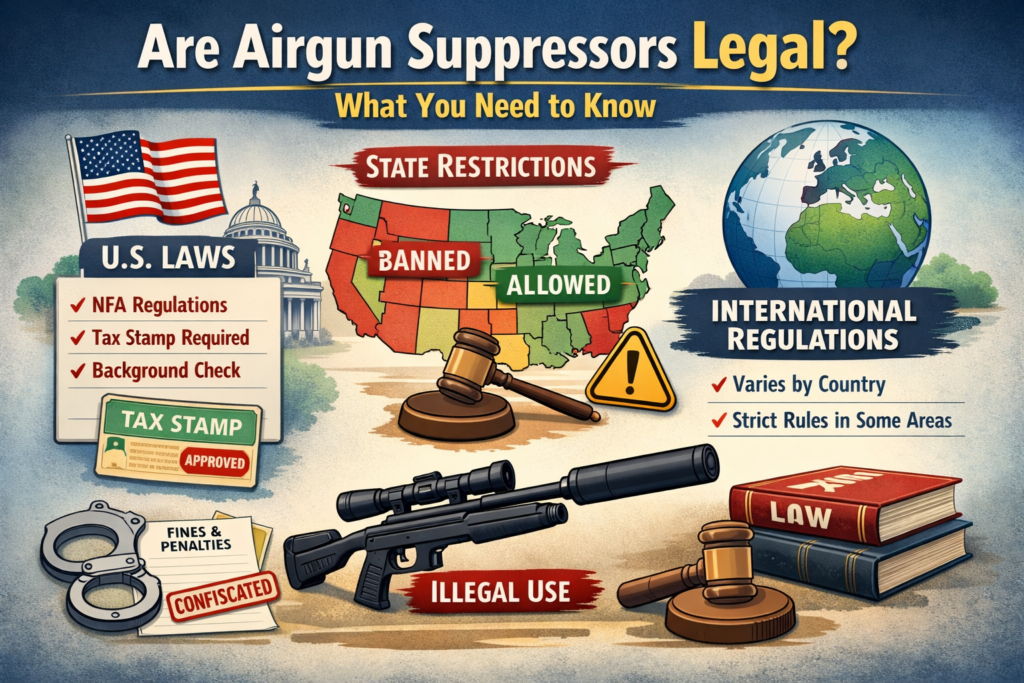
United States: Federal Law Overview
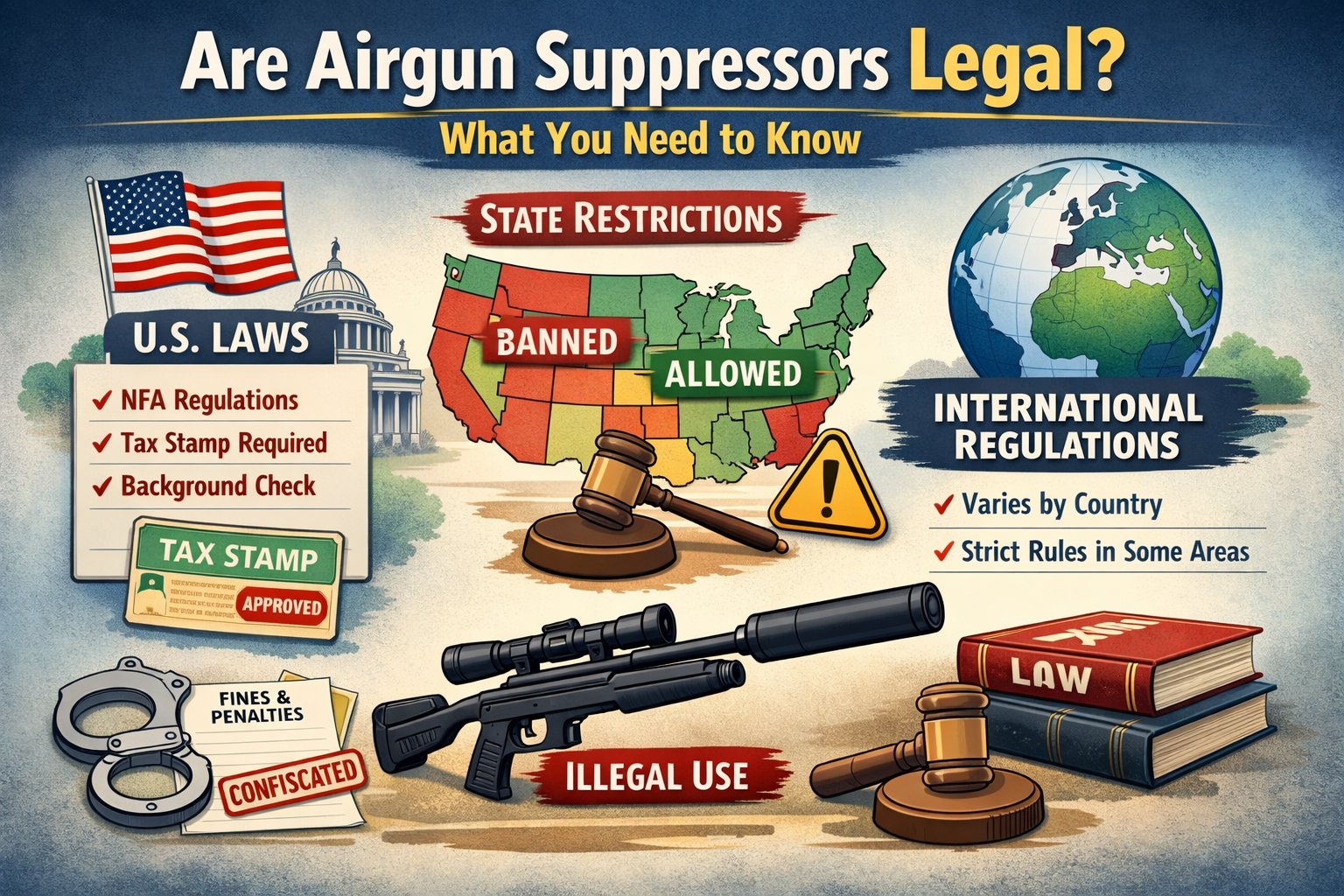
In the U.S., suppressors are regulated under the National Firearms Act (NFA).
This means:
- Registration is required
- Background checks are required
- Tax stamps apply
Even if used with an airgun, a suppressor may still be treated as a firearm suppressor under federal law.
For official legal definitions and federal guidelines, check this ATF link
State Laws Vary
Even within the U.S., laws can differ significantly.
Some states:
- Allow suppressors with proper registration
Others:
- Restrict or prohibit them
This makes it critical to check your local regulations before purchasing.
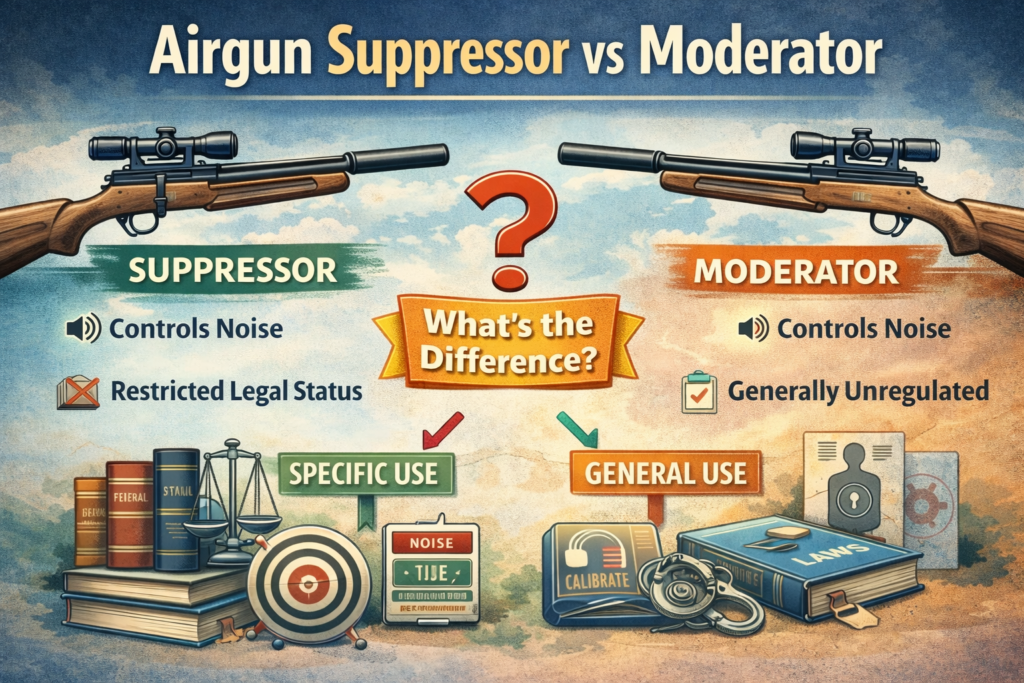
Are Airgun Moderators Treated Differently?
In some countries, the term “moderator” is used instead of suppressor.
This distinction can matter.
In certain regions:
- Moderators designed specifically for airguns are legal
- Firearm suppressors are restricted
However, in other areas, both are treated the same.
To understand the technical differences between these terms and how they impact performance, read our full guide on airgun suppressor vs moderator.
International Laws: A Quick Overview
Outside the U.S., the legal landscape changes.
United Kingdom
- Airgun moderators are generally legal
- Firearm suppressors are regulated differently
Europe
- Varies by country
- Some allow airgun-specific moderators freely
Other Regions
- Often regulated similarly to firearm suppressors
This variation is why the question “are airgun suppressors legal” depends heavily on location.
Why Some Airguns Have Built-In Suppression
To avoid legal complications, many manufacturers design airguns with integrated suppression systems.
These systems:
- Are part of the barrel
- Are not removable
- Often comply with regulations
This is a common workaround in stricter regions.
Buying Considerations: Staying Compliant
Before purchasing anything, you should:
- Check local laws
- Confirm classification
- Verify compatibility
- Understand import restrictions
Never assume that because an airgun is legal, accessories are automatically allowed.
Real-World Risks of Getting It Wrong
Ignoring legal requirements can lead to serious consequences.
Potential risks include:
- Fines
- Confiscation
- Legal penalties
This is why understanding whether airgun suppressors legal is essential before making a purchase.
How Retailers Handle Legal Restrictions
Reputable retailers often:
- Avoid selling restricted items
- Provide compliant alternatives
- Focus on legal configurations
For example, Palm Beach Airguns focuses on high-quality airguns and compatible setups that align with performance and compliance considerations.
Rather than offering questionable accessories, the emphasis is on systems that work effectively within legal boundaries.
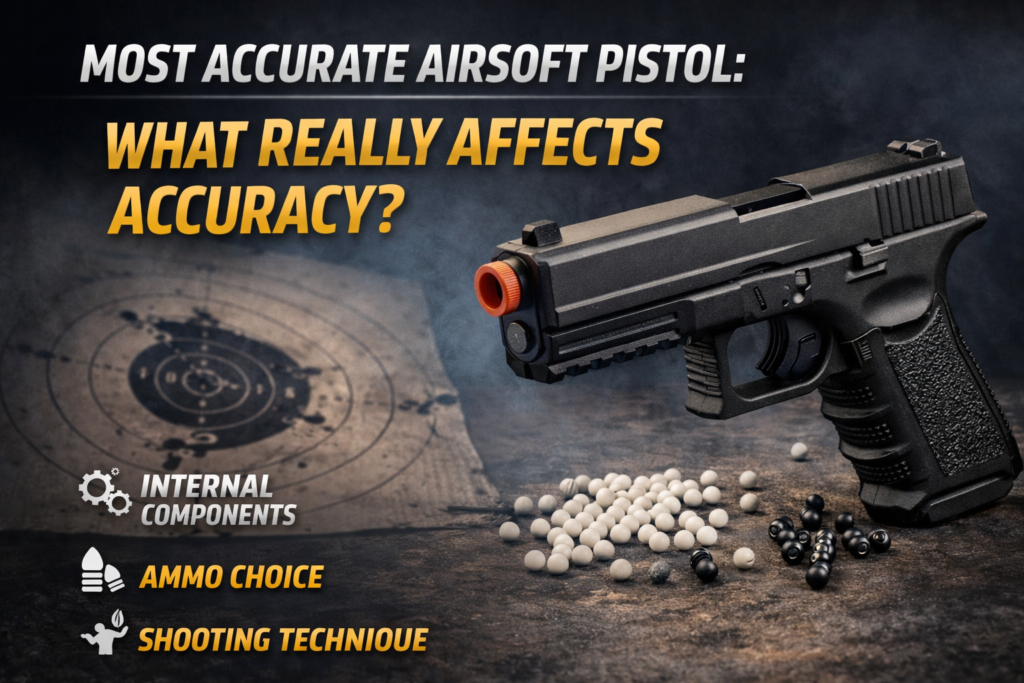
If you’re focused on performance beyond noise reduction, you can also explore our guide on the most accurate airsoft pistol to understand how consistency and setup impact results.
Alternatives to Suppressors
If suppressors are restricted, you still have options.
Integrated Systems
Many airguns already include noise reduction.
Subsonic Shooting
Lower velocity reduces noise naturally.
Longer Barrels
Help reduce sound signature.
Understanding Intent vs Classification
One of the biggest misconceptions is that intended use determines legality.
In reality:
- Classification matters more than intent
Even if used only with an airgun, a suppressor may still be regulated.
How to Stay Safe Legally
Best practices include:
- Research local laws
- Consult reliable sources
- Avoid questionable purchases
- Buy from trusted retailers
When in doubt, don’t assume — verify.
If you’re evaluating options while staying compliant, our guide on the best airgun suppressor highlights models that balance performance, build quality, and reliability.
Final Takeaways: Staying Compliant While Building the Right Setup
The question of whether airgun suppressors legal cannot be answered with a simple yes or no
and that’s what makes this topic so important to understand before making any decisions.
It ultimately depends on several key factors:
- Your location
- Device classification
- Local and state regulations
Each of these plays a role in determining whether airgun suppressors legal in your specific situation, and overlooking even one of them can lead to confusion or potential legal issues.
One of the biggest mistakes people make is assuming that because airguns are generally less regulated, the same applies to accessories. In reality, laws surrounding suppression devices are often much stricter, which is why the question “are airgun suppressors legal” requires careful research rather than assumptions.
Understanding these factors is essential not only for staying compliant, but also for building a setup that performs well without unnecessary risk. Taking the time to verify whether airgun suppressors legal in your area allows you to move forward with confidence and avoid costly mistakes.
When approached correctly, you can create an effective and compliant shooting setup that meets your needs — whether that’s for backyard practice, pest control, or target shooting — all while staying within the boundaries of the law.