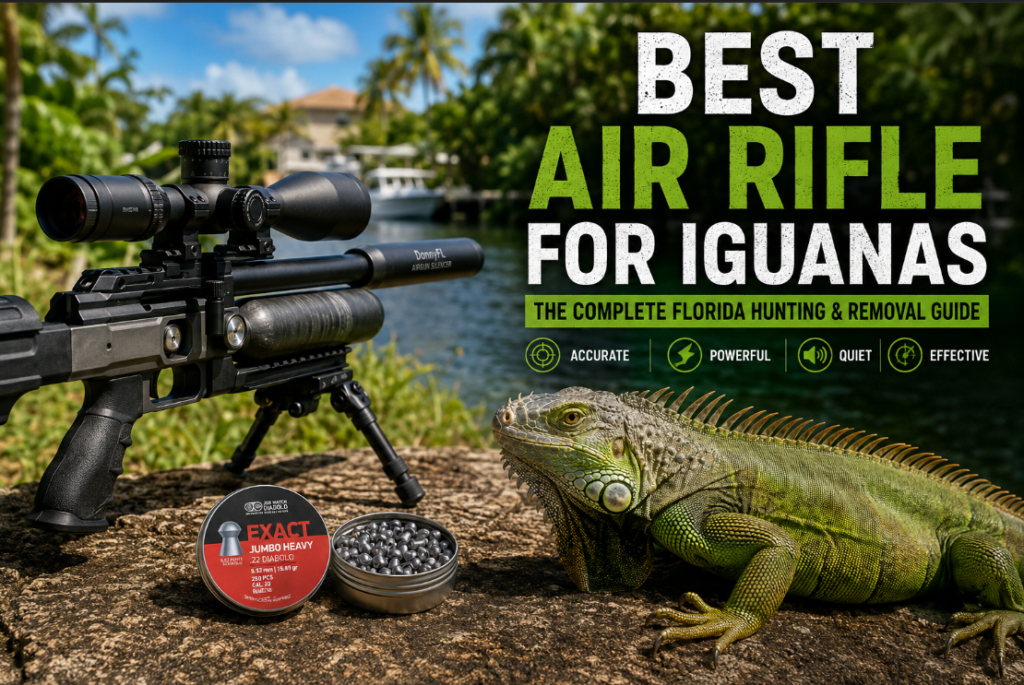
If you are looking for accuracy, power, consistency, and a shooting experience that can be tailored to almost any purpose, a PCP air rifle is one of the most capable options available in the airgun world.
PCP stands for pre-charged pneumatic. Instead of using a spring, gas piston, or CO2 cartridge to generate power for each shot, a PCP stores highly compressed air in an onboard reservoir. That stored air is released in a controlled amount every time the trigger is pulled.
The result is a platform that can offer excellent accuracy, low recoil, multiple shots from a single fill, and considerably more flexibility than many traditional air rifle designs.
But buying your first PCP air rifle also raises a lot of questions.
How do you fill it? Which caliber should you choose? How much power do you really need? What is a regulator? Do you need an air compressor? And how much should you spend?
This guide covers the fundamentals so you can understand what you’re buying before choosing your next rifle.
What Is a PCP Air Rifle?
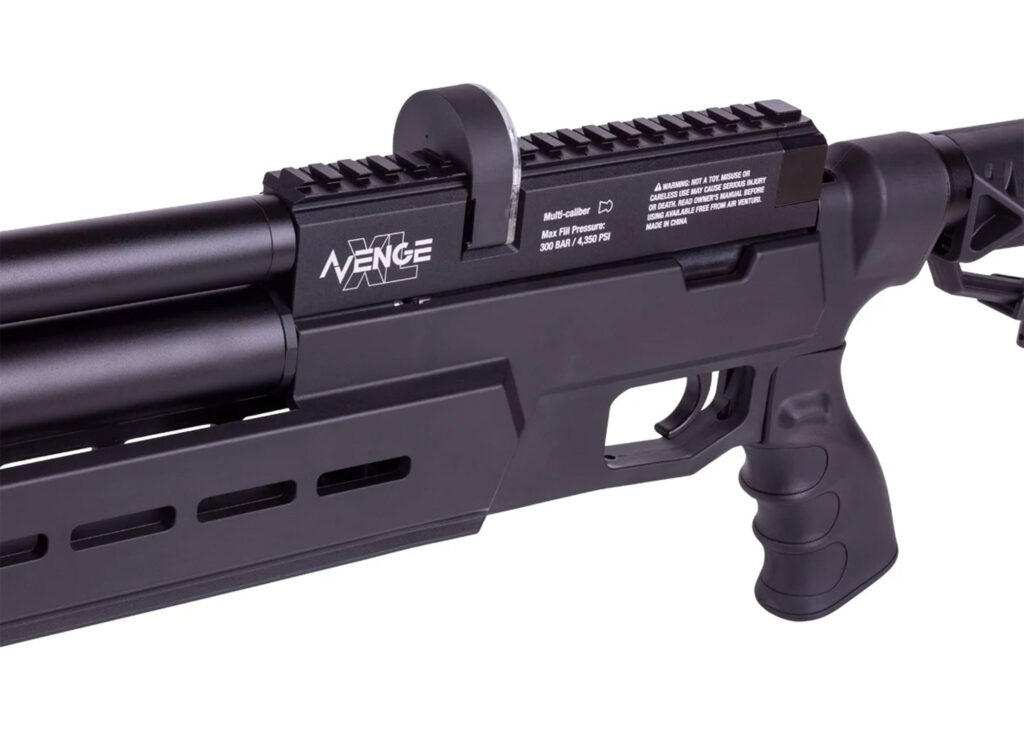
A PCP air rifle is an airgun powered by compressed air stored inside a reservoir or bottle attached to the rifle.
Before shooting, the reservoir is filled using a source capable of producing high-pressure air. Depending on the rifle and setup, that could be a specialized hand pump, high-pressure compressor, or external HPA tank.
Once filled, the rifle can normally fire multiple shots before it needs to be charged again.
This is fundamentally different from a break-barrel air rifle, where the shooter compresses a spring or gas piston before every shot.
With a PCP air rifle, most of the work happens before you start shooting. Fill the rifle, load the magazine, and the stored air provides the power for a series of shots.
That makes PCP technology especially attractive for shooters who value consistency and repeatability.
How Does a PCP Air Rifle Work?
The basic principle is relatively simple.
A PCP air rifle has a reservoir containing compressed air. When the shooter pulls the trigger, the firing system briefly opens a valve. A controlled amount of compressed air escapes from the reservoir and travels behind the pellet or slug.
That expanding air pushes the projectile through the barrel.
The rifle then retains the remaining compressed air for the following shots.
Many modern PCP rifles also use a regulator. The regulator helps manage the air pressure being delivered from the main reservoir to the firing system.
This can help the rifle produce more consistent velocity across multiple shots.
The exact operating pressure varies significantly from one rifle to another. Some rifles operate around 3,000 PSI, while other designs use significantly higher fill pressures. Always follow the manufacturer’s specified maximum fill pressure for the particular rifle.
If you want a deeper breakdown of the firing cycle, reservoir, regulator, valve, and plenum, read our How Does a PCP Air Rifle Work? guide.
Why Have PCP Air Rifles Become So Popular?
One of the biggest reasons is performance.
A quality PCP air rifle combines several characteristics that airgun shooters typically want:
- Very little recoil
- Strong accuracy potential
- Consistent velocity
- Multi-shot magazines
- Adjustable power on many models
- Multiple caliber options
- High power potential
- Easy follow-up shots
Because there is no heavy spring moving inside the rifle during the shot cycle, a PCP generally has a smoother firing behavior than a traditional spring-powered rifle.
That doesn’t automatically make every PCP accurate. Barrel quality, ammunition, regulator setup, shooter technique and the rifle’s overall design still matter.
But the platform gives manufacturers an excellent foundation for building highly accurate air rifles.
PCP Air Rifle vs Traditional Spring Air Rifle
A spring-powered rifle and a PCP air rifle accomplish the same basic objective using very different systems.
With a spring or gas-ram rifle, you generally cock the rifle before every shot. That process stores the energy needed to fire.
A PCP stores enough compressed air to power many shots.
That means a PCP usually requires less physical effort between shots and produces less movement during firing.
Spring rifles have one major advantage: simplicity.
Once you own the rifle and ammunition, you don’t need an external air source.
A PCP air rifle, on the other hand, requires some method of refilling its reservoir.
For shooters who only occasionally use an air rifle, the simplicity of a break barrel can be attractive. For shooters interested in higher levels of accuracy, repeated shooting, advanced tuning or more power, PCP systems offer considerably more possibilities.
We’ll explore this comparison in much greater detail in our upcoming PCP Air Rifle vs Spring Air Rifle guide.
Choosing the Right PCP Air Rifle Caliber
One of the first decisions you’ll encounter when shopping for a PCP air rifle is caliber.
There isn’t one caliber that is automatically best for everyone.
.177 Caliber
.177 is one of the most common airgun calibers.
It uses smaller, lighter projectiles and is frequently chosen for target shooting, recreational shooting and situations where flatter trajectories can be useful.
It can also use less air per shot than larger calibers depending on the rifle’s configuration.
.22 Caliber
.22 is one of the most versatile choices for a PCP air rifle.
It offers a useful balance between projectile weight, velocity, energy, ammunition availability and air consumption.
For many shooters purchasing their first PCP, .22 is a logical place to start.
.25 Caliber
Moving up to .25 provides heavier projectiles and increased energy potential.
It is popular with shooters looking for additional power while still maintaining manageable air consumption and a broad selection of pellets and slugs.
.30 Caliber and Larger
Modern PCP technology has made larger-caliber air rifles increasingly capable.
A powerful PCP air rifle in .30, .35, .45, .50 or other large calibers can generate dramatically more energy than a traditional small-bore pellet rifle.
However, more power usually comes with trade-offs.
Larger projectiles require more air, which can reduce the number of shots available from each fill. The rifle, air reservoir and supporting equipment may also become larger or more expensive.
The correct caliber therefore depends much more on intended use than simply choosing the largest option.
How Much Power Do You Need?
Power numbers attract attention, but the most powerful PCP air rifle isn’t automatically the best rifle for every shooter.
More power may mean greater projectile energy, but it can also mean:
- Increased air consumption
- Lower shot count
- More noise
- More expensive ammunition
- Additional tuning requirements
- A heavier or larger platform
For target shooting, excessive power can be unnecessary.
For longer-range shooting or applications requiring more projectile energy, higher-power configurations may make more sense.
The goal should be to choose a PCP air rifle with enough performance for the intended use rather than simply chasing the highest possible velocity.
We’ll cover this subject separately in our High Power PCP Air Rifles: Power, Calibers and Performance guide.
Regulated vs Unregulated PCP Air Rifles
You’ll often see the word regulated when comparing PCP rifles.
A regulator controls the pressure delivered from the main air reservoir to the firing system.
Without a regulator, reservoir pressure gradually decreases as the rifle is fired. Depending on the design, this can cause velocity to change throughout the shot string.
A regulated PCP air rifle attempts to deliver air at a more consistent operating pressure until the reservoir falls below the regulator’s set point.
That can produce a more predictable shot string.
Regulators are especially valuable on rifles designed around precision shooting, but they are only one part of overall performance. Barrel quality, valve design, hammer settings, ammunition selection and tuning are also important.
How Do You Fill a PCP Air Rifle?
This is probably the biggest question new PCP owners have.
Unlike a bicycle tire, the reservoir in a PCP air rifle requires specialized high-pressure equipment.
There are three common approaches.
PCP Hand Pump
A high-pressure hand pump is usually the least expensive way to enter the PCP world.
These are specifically designed to reach the pressures required by PCP rifles.
The advantage is independence from electricity and relatively low initial cost.
The disadvantage is physical effort, especially with rifles that have large reservoirs or high fill pressures.
PCP Compressor
For someone planning to shoot regularly, a high-pressure air compressor is often the most convenient solution.
Instead of manually pumping the reservoir, the compressor does the work.
A compressor can make owning multiple PCP rifles considerably easier and is particularly useful with larger bottles and higher-volume shooting.
HPA Tank
Another option is filling the rifle from a separate high-pressure tank.
The external tank is filled beforehand and then used to refill the rifle.
This can be convenient at the range or in locations where electricity isn’t readily available.
Palm Beach Airguns carries a selection of air charging systems, compressors, HPA tanks, fittings and accessories for shooters building a complete PCP setup.
We’ll break down all three methods in our dedicated How to Fill a PCP Air Rifle: Tanks, Pumps and Compressors article.
Umarex provides a useful additional explanation of how PCP air rifles work, including examples of different reservoir and regulator systems.
How Many Shots Do You Get From One Fill?
There is no universal answer.
The number of usable shots from a PCP air rifle depends on several factors:
- Reservoir size
- Starting pressure
- Regulator settings
- Caliber
- Projectile weight
- Power level
- Valve design
- Rifle tune
A lower-powered .177 or .22 rifle may prioritize efficiency and provide a large number of shots.
A high-power large-caliber rifle can consume substantially more air every time it fires.
This is why advertised shot counts should be considered alongside the rifle’s intended power level.
A rifle producing fewer shots isn’t necessarily less efficient in a meaningful sense if each shot is generating significantly more energy.
Are PCP Air Rifles Accurate?
Accuracy is one of the biggest reasons shooters move into PCP systems.
The low-recoil firing cycle of a PCP air rifle allows the rifle to remain relatively stable as the projectile leaves the barrel.
That gives the shooter a consistent platform.
Higher-end models may also provide adjustments for regulator pressure, hammer spring tension, valve settings and other variables that affect how the rifle behaves.
But ammunition selection still matters enormously.
Two pellets or slugs of the same caliber can perform very differently from the same barrel.
Finding the ammunition your rifle prefers is therefore one of the most important parts of maximizing accuracy.
Pellets vs Slugs in a PCP Air Rifle
Traditional diabolo-shaped pellets remain extremely popular.
They are relatively lightweight and are available in a wide variety of calibers, weights and designs.
Slugs resemble a more conventional cylindrical projectile and have become increasingly popular with powerful PCP platforms, particularly among shooters interested in longer-range performance.
Not every PCP air rifle is optimized for both.
Some barrels perform particularly well with pellets while others are designed or tuned to take advantage of slugs.
Before purchasing ammunition in large quantities, check the manufacturer’s recommendations and test different options to see what performs best through your particular rifle.
Beginner PCP vs High-End PCP
The PCP market now covers an enormous range of price points.
Entry-level rifles can provide an accessible introduction to pre-charged pneumatics without requiring advanced tuning knowledge.
A beginner looking for a first PCP air rifle should generally prioritize:
- Reliability
- Simple operation
- Easy filling
- Good ammunition availability
- Reasonable shot count
- Magazine availability
- Manufacturer support
More advanced rifles may add adjustable regulators, interchangeable barrels, external power adjustments, large carbon-fiber bottles and highly configurable firing systems.
Palm Beach Airguns carries PCP platforms from manufacturers including FX Airguns, Umarex, Air Venturi, RAW, Daystate, Brocock, Western Airguns and other established airgun brands.
If you’re new to the platform, we’ll cover the most important buying considerations in our upcoming Best PCP Air Rifle for Beginners guide.
Some PCP Air Rifles Are Built for Tuning
One of the biggest differences between basic and premium PCP platforms is adjustability.
Advanced shooters may want a PCP air rifle that allows them to alter how air is delivered to the projectile.
Depending on the model, adjustments can include:
- Regulator pressure
- Hammer spring tension
- Valve settings
- Power levels
- Barrel or liner configuration
- Projectile selection
Platforms such as the FX Impact series have become popular partly because they give experienced shooters extensive control over rifle configuration.
You can learn more about the brand in our FX Airguns guide.
For a simpler compact example, our Umarex Notos review looks at a very different type of PCP platform.
These rifles illustrate just how broad the PCP category has become.
What Else Do You Need With a PCP Air Rifle?
The rifle is only part of the setup.
Depending on what you buy, you may also need:
- A hand pump, compressor or HPA tank
- Correct fill probe or Foster fitting
- Pellets or slugs
- Scope and mounts
- Magazines
- Cleaning and maintenance supplies
- Rifle case
- Chronograph for advanced tuning
This should be included in your budget when comparing rifles.
A less expensive PCP air rifle that requires several additional accessories can sometimes cost more to get running than expected.
On the other hand, once you own a good compressor or tank setup, that equipment can usually support future PCP purchases as well.
What Should You Look for Before Buying?
Before purchasing a PCP air rifle, start by answering a few questions.
What will you primarily use the rifle for?
How often will you shoot?
What caliber fits that use?
Do you want maximum power or more shots per fill?
How are you going to refill the rifle?
Do you want a simple platform or something highly adjustable?
What is your total budget including optics and filling equipment?
Answering those questions will dramatically narrow down the options.
There is no single PCP that is perfect for everyone because modern pre-charged pneumatic rifles range from compact beginner-friendly carbines to sophisticated competition platforms and extremely powerful big-bore airguns.
Find the Right PCP Air Rifle at Palm Beach Airguns
The biggest advantage of today’s PCP market is choice.
Whether you’re looking for an approachable first PCP air rifle, a compact platform, a precision-oriented setup, a powerful hunting rifle or a highly adjustable premium system, there are more options available than ever before.
The important thing is choosing the rifle around your intended use rather than focusing on a single specification.
Caliber, power, shot count, reservoir size, regulator design, filling requirements, weight and adjustability all work together.
Palm Beach Airguns carries a wide range of air rifles along with the HPA equipment, ammunition, optics and accessories needed to build a complete setup.
If you’re unsure where to begin, start with your intended use and work backward from there.
A properly selected PCP air rifle can provide an exceptionally accurate, versatile and enjoyable airgun platform that can grow with you as your experience increases.