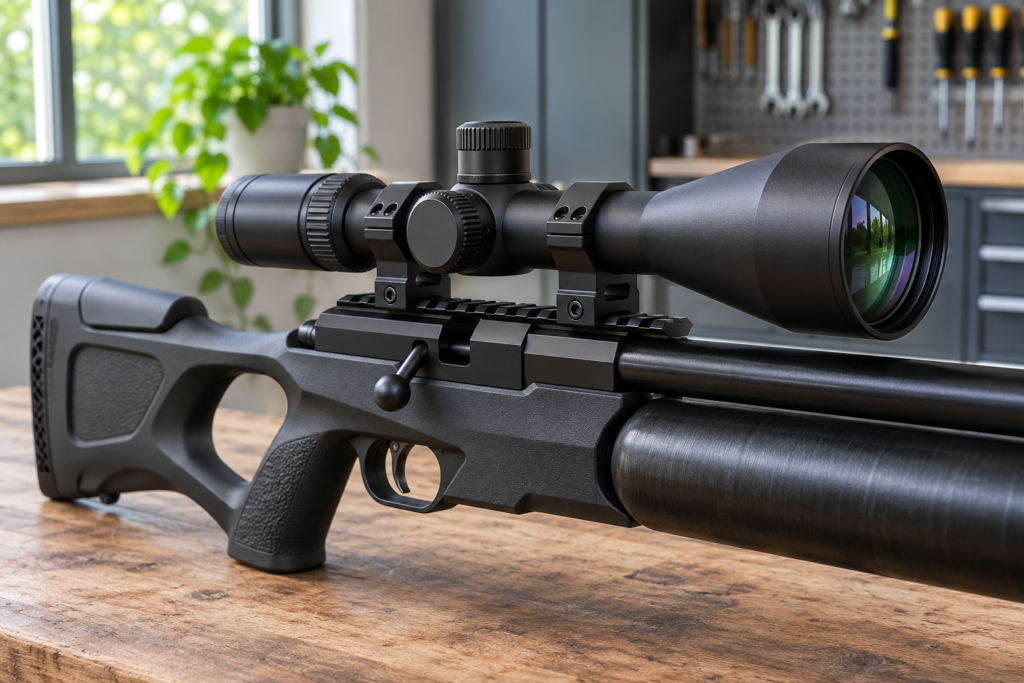
Choose an air rifle scope that matches your shooting distances, rifle’s recoil, and mounting system before comparing extra features. Start with a clear image, useful magnification, and suitable close-range focus.
The biggest lens or longest feature list doesn’t automatically make the best choice. A comfortable, compatible setup matters more than specifications you rarely use.
Whether you enjoy backyard plinking or regular target sessions, start with how you actually shoot. Then compare optics that meet those needs.
Why the Right Air Rifle Scope Matters
Airgun shooting often happens at relatively short distances, from around 10 yards to 50 yards and beyond. An optic designed around distant targets may not focus comfortably at your nearest shooting position.
The right air rifle scope should suit the distances you actually use. That includes the closest paper target, not just the farthest target at the range.
Comfort matters, too. You should see a clear image without stretching your neck or struggling to find a comfortable head position.
For background on the basic optical components, read about telescopic sights. Then use your own shooting needs to narrow the choices.
Start With How You Shoot
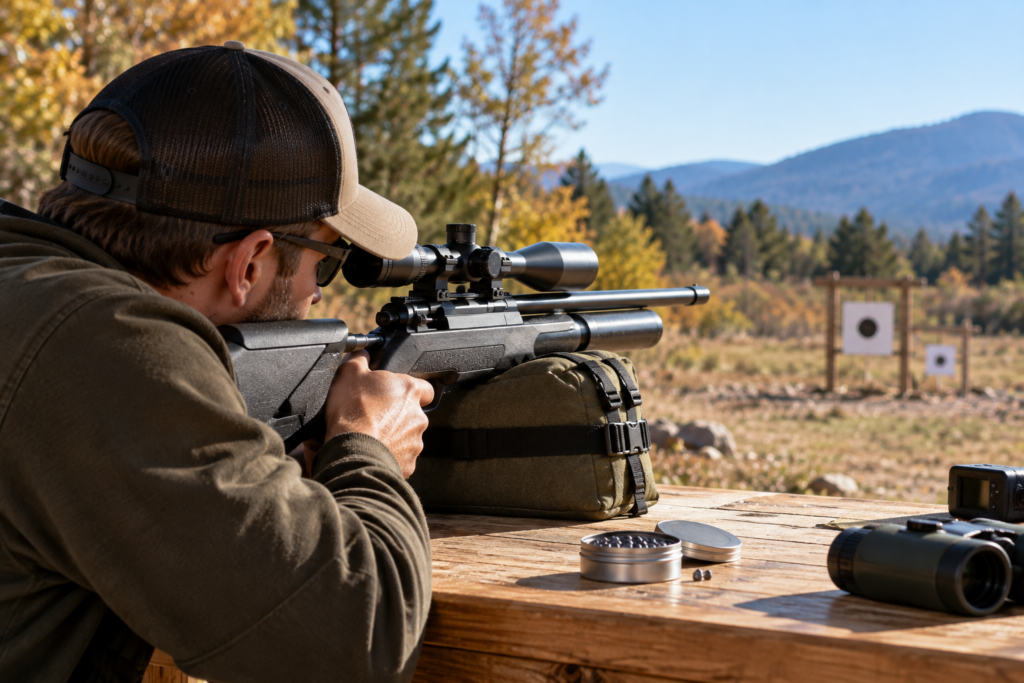
Before buying an air rifle scope, identify your main activity and typical distances. A setup for casual plinking may look different from one intended for dedicated paper-target sessions.
Backyard Plinking
For casual target shooting, prioritize straightforward controls, manageable weight, and a comfortable view. Check your closest target distance before choosing an optic.
Use a suitable backstop and confirm that shooting is permitted where you live. A scope never replaces awareness of your surroundings.
Pest and Iguana Control
For pest control, prioritize clear identification and equipment you can use comfortably. Check Florida FWC guidance and local rules before any hunting or pest-control activity.
Our overview of the best air guns for iguanas provides broader equipment context. Keep your scope choice focused on compatibility and your intended conditions.
Target Shooting
For paper targets, consider target size, viewing comfort, and how much detail you want to see. Compare air rifles and optics as a complete package, including mounting space and overall balance.
Air Rifle Scope Magnification: How Much Do You Actually Need?
Magnification makes the target appear larger, but more isn’t always better. Higher settings narrow the view and make normal movement more noticeable.
Your air rifle scope should offer a useful low setting as well as enough enlargement for your target sessions. Don’t judge a variable optic solely by its maximum number.
Consider whether you prefer a broad view or a closer look at small paper targets. Your eyesight, shooting position, and target size all influence that preference.
When comparing scope magnification, look through different options if possible. Check whether the image remains comfortable across the range you expect to use.
A fixed-power design can keep controls simple. A variable model offers flexibility when your target distances and activities change.
Objective Lens Size and Low Light
The objective is the front lens, usually identified by the final number in a scope’s size description. Its diameter is measured in millimeters.
A larger objective can help an air rifle scope deliver a brighter view under some conditions. However, lens quality, coatings, magnification, and your eyes also affect what you see.
Bigger objectives can add bulk and require more clearance above the rifle. That may affect ring height and how comfortably your cheek rests on the stock.
Choose an airgun scope by considering the whole package. A manageable optic with a comfortable viewing position can be more useful than a larger model that feels awkward.
For shaded South Florida shooting areas, compare image clarity rather than relying on objective diameter alone. An illuminated reticle does not brighten the target itself.
Parallax and Side Focus
Parallax is apparent movement between the reticle and target when your eye position changes. It differs from simply having a blurry reticle.
Check whether an air rifle scope offers parallax adjustment that reaches your nearest intended distance. A model’s maximum magnification doesn’t tell you its minimum focusing distance.
Some designs use an adjustable objective at the front. Others place the adjustment on the side of the scope.
The eyepiece adjustment serves a different purpose: making the reticle appear sharp to your eye. Don’t assume one control replaces the other.
Read our guide to scope parallax explained to understand focusing distance and what to check before buying.
Reticles and Focal Plane
The reticle is the crosshair or reference pattern you see through the optic. Choose a design that remains readable without overwhelming your view.
An air rifle scope may use a first focal plane, or FFP, reticle. Its apparent size changes as you change magnification.
A second focal plane, or SFP, reticle maintains the same apparent size. Neither design automatically provides better glass or greater durability.
Consider how each looks at the magnification settings you expect to use. Fine details that appear comfortable at one setting may feel less useful at another.
Our FFP vs SFP comparison explains how each reticle behaves when you change magnification and which design fits your shooting routine.
Tube Size and Mounting
Tube diameter determines the ring size your air rifle scope requires. It is separate from objective diameter, so don’t confuse the two measurements.
Your rifle’s mounting rail must also match the mount. Dovetail and Picatinny systems require compatible hardware rather than interchangeable assumptions.
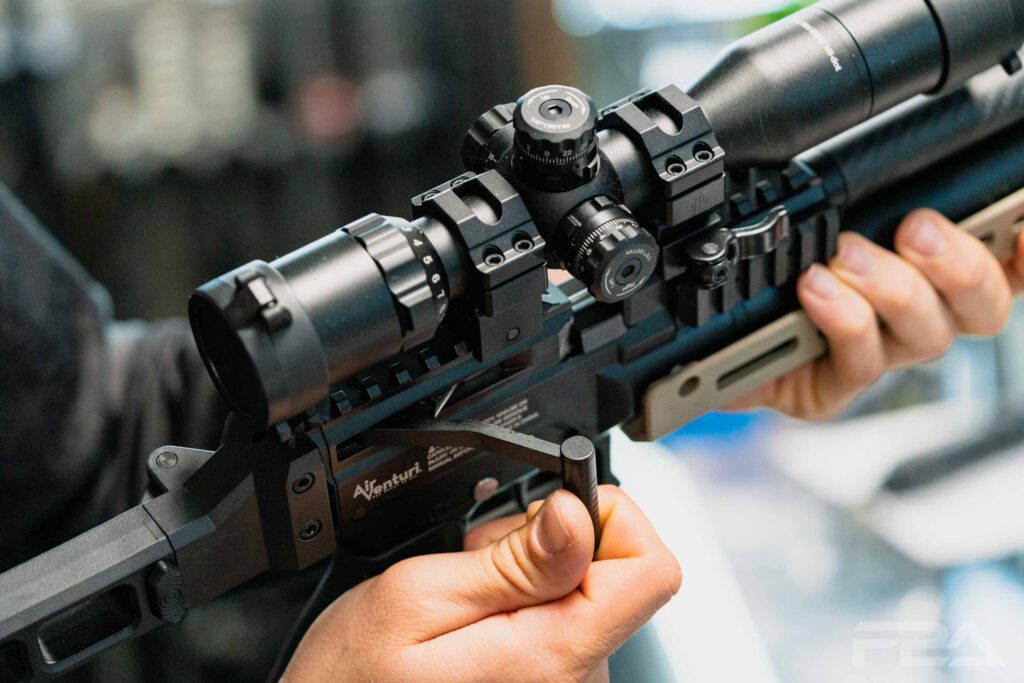
Browse scope mounts and rings after confirming your rifle’s rail and the optic’s tube diameter. Also check clearance around the objective, magazine, and controls.
Ring height should provide clearance while supporting a comfortable head position. Follow manufacturer mounting instructions and torque specifications rather than guessing.
For help choosing compatible rails, rings, and mounting heights, read our airgun scope mounts guide.
PCP vs Spring Recoil
An air rifle scope must be compatible with the platform carrying it. Spring-piston rifles create a distinctive recoil cycle that can challenge unsuitable optics.
When choosing a scope for PCP air rifle use, still confirm the manufacturer’s compatibility guidance. Lower recoil does not eliminate questions about mounting, focus, or warranty coverage.
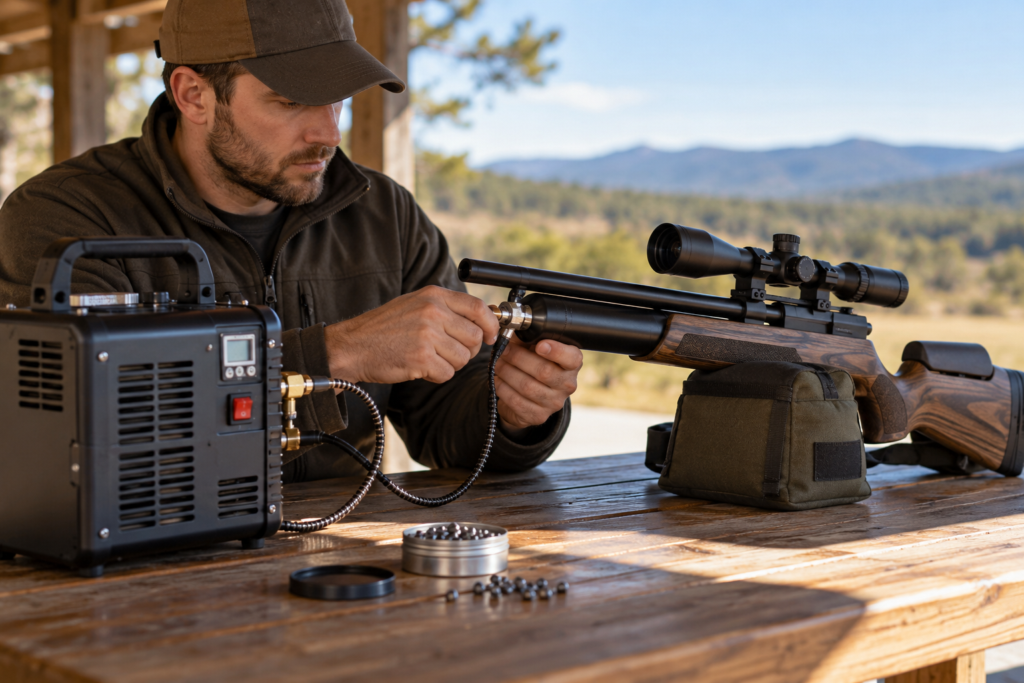
Read our PCP air rifle guide for platform basics. Our comparison o f PCP vs spring air rifles explains the broader differences.
Don’t assume a firearm recoil claim also confirms spring-piston suitability. Check the specific manufacturer statement before purchasing.
Our airgun rated scope guide explains recoil compatibility and what to confirm with the manufacturer before mounting an optic.
Air Rifle Scope Specifications at a Glance
Use this table to compare an air rifle scope against your actual requirements. A longer specification sheet only helps when its features solve a real need.
| Spec | What it means | What to look for |
|---|---|---|
| Magnification | How large the target appears | A useful viewing range for your activities |
| Objective diameter | Front lens size | Balanced size, clearance, and viewing comfort |
| Minimum parallax distance | Closest specified adjustment distance | Coverage of your nearest targets |
| Focal plane | How the reticle behaves during zoom changes | A pattern you can read comfortably |
| Tube diameter | Size of the main tube | Matching ring diameter |
| Recoil compatibility | Manufacturer-supported platform suitability | Confirmation for your rifle type |
| Length and weight | Overall physical size | Comfortable balance and mounting space |
Your Air Rifle Scope Buying Checklist
Before ordering, write down your rifle model and the specifications that matter most. Use this air rifle scope checklist to catch compatibility problems early.
- Identify your main activity and usual target distances.
- Confirm the closest distance where you need a clear image.
- Choose a magnification range that feels comfortable.
- Check the manufacturer’s recoil compatibility guidance.
- Confirm the tube diameter and matching ring size.
- Identify your rifle’s mounting rail type.
- Check objective, magazine, and control clearance.
- Compare reticle visibility at your preferred settings.
- Review mounting instructions, warranty terms, and included accessories.
- Confirm overall length and weight suit your rifle.
Keep those notes when comparing products. They make it easier to ask useful questions and avoid choosing features you won’t use.
Scopes From Our Inventory to Consider
These two compact options provide different feature combinations. Compare each air rifle scope with your checklist before deciding which deserves a closer look.
Vector Optics Veyron 3-12×44 FFP Compact
The Veyron 3-12×44 FFP measures 9.7 inches long. Its listed features include fully multi-coated glass and locking turrets.
Consider its stated length alongside the available space on your rifle. Then confirm mounting requirements and compatibility for your specific platform.
Vector Optics Veyron 3-12x44IR SFP Compact
The Veyron 3-12x44IR SFP features an illuminated reticle and close-range side focus. Its listed elevation adjustment range is 30 MIL.
That adjustment figure describes available adjustment, not a guaranteed shooting distance. Confirm the exact minimum focusing distance if your nearest targets are especially close.
You can also shop our optics to compare other options. Keep your rifle details and preferred features nearby while browsing.
Choose for Your Rifle and Your Routine
The best air rifle scope for your needs balances compatibility, viewing comfort, and useful features. Start with your shooting distances, then check focus, mounting requirements, and recoil suitability.
Visit our family-owned store in Royal Palm Beach, Florida, or talk to our team. Bring your rifle model and a short description of how you shoot so we can help narrow your choices.