Choosing between a PCP vs spring air rifle is one of the biggest decisions new airgun buyers face.
Both systems can be accurate, reliable, and enjoyable to shoot, but they work in very different ways.
A spring air rifle creates power by compressing a spring or gas piston before each shot. A PCP, or pre-charged pneumatic rifle, stores compressed air in a reservoir and uses a small amount of that air every time you pull the trigger.
That difference affects almost everything else, including recoil, accuracy, shot count, power, cost, and how easy the rifle is to use.
If you are trying to decide between a PCP vs spring air rifle, this guide breaks down the key differences.
How a Spring Air Rifle Works
A spring air rifle uses a mechanical powerplant.
Before each shot, the shooter cocks the rifle. This compresses a spring or gas ram inside the action.
When the trigger is pulled, that stored energy drives a piston forward.
The piston compresses air behind the pellet and sends it through the barrel.
This design is simple and self-contained.
You do not need an external tank, compressor, or hand pump.
That simplicity is one of the biggest reasons spring air rifles remain popular.
How a PCP Air Rifle Works
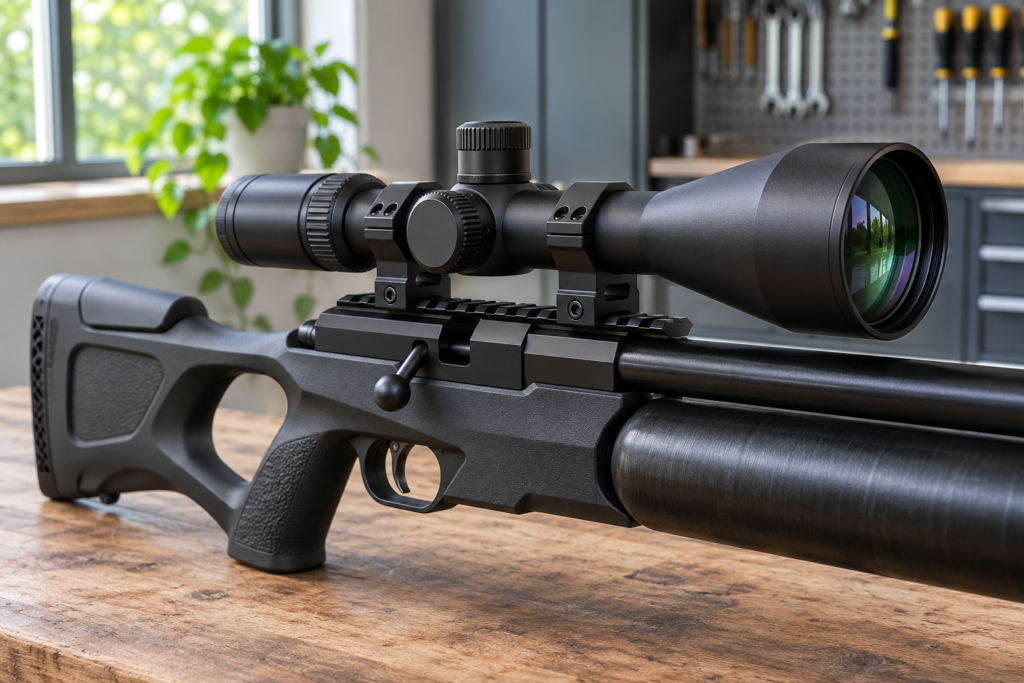
A PCP air rifle uses compressed air stored in an onboard reservoir.
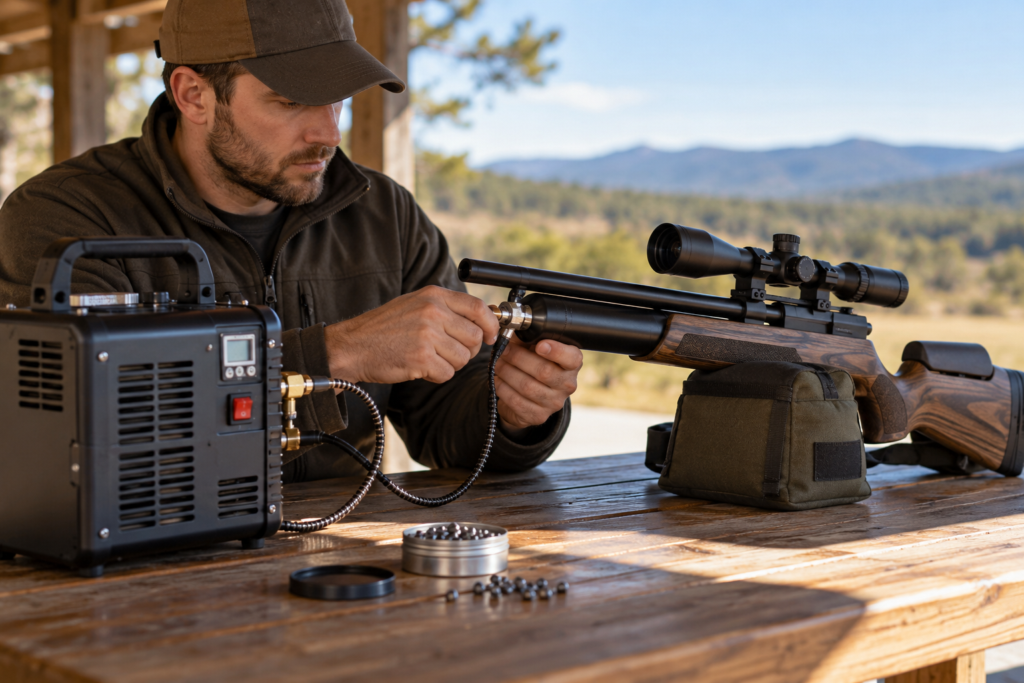
The rifle is filled beforehand using a high-pressure hand pump, compressor, or HPA tank.
When the trigger is pulled, the rifle releases a controlled amount of compressed air behind the pellet or slug.
That air propels the projectile through the barrel.
Because the rifle stores enough air for multiple shots, the shooter does not need to cock a heavy spring before every shot.
If you want a deeper explanation, our How Does a PCP Air Rifle Work? guide covers the complete system.
PCP vs Spring Air Rifle: The Biggest Difference
The biggest difference between a PCP vs spring air rifle is where the energy comes from.
A spring rifle creates and stores energy every time you cock it.
A PCP stores compressed air in advance.
That single difference changes the entire shooting experience.
Spring rifles are simpler and more independent.
PCPs are generally smoother, easier to shoot, and more flexible.
Neither system is automatically better for every shooter.
The right choice depends on what matters most to you.
Accuracy
When comparing PCP vs spring air rifle accuracy, PCP rifles generally have an advantage.
The main reason is recoil.
A spring rifle contains a piston moving rapidly inside the action.
That movement creates a unique recoil cycle before the pellet even leaves the barrel.
Because of this, powerful spring rifles can be sensitive to how they are held.
PCP rifles do not have that same heavy internal movement.
They release compressed air through a valve, which creates much less recoil.
This makes it easier to hold the rifle consistently from shot to shot.
A quality spring rifle can still be extremely accurate, but it often requires more technique.
For shooters who want the easiest path to repeatable accuracy, a PCP is usually more forgiving.
Recoil
Recoil is another major difference in the PCP vs spring air rifle comparison.
Spring rifles can produce forward and backward movement during the firing cycle.
This can make them feel very different from PCP rifles.
PCPs usually have very little recoil.
That smoother shot cycle is one reason many target shooters and precision-focused airgun owners prefer pre-charged pneumatic systems.
Less recoil also makes it easier to stay on target after the shot.
Ease of Shooting
A PCP is typically easier to shoot once it has been filled.
Load the magazine, cycle the action, and fire.
Many PCP rifles also offer multi-shot magazines.
A spring rifle requires more physical effort.
Most designs need to be cocked before every shot.
On more powerful rifles, this cocking effort can become noticeable during long shooting sessions.
For occasional backyard shooting, that may not matter.
For higher-volume shooting, the easier operation of a PCP can make a significant difference.
Shot Speed and Follow-Up Shots
PCP rifles usually allow faster follow-up shots.
Because the rifle already contains compressed air, the shooter only needs to cycle the bolt or sidelever and load the next projectile.
Many modern PCP rifles use magazines that automatically advance to the next pellet.
A spring rifle must normally be cocked and loaded for every shot.
This makes it slower between shots.
If fast follow-up shots or repeated target shooting matter to you, PCP has an advantage.
Power
Power varies widely in both categories.
There are mild spring rifles and extremely powerful spring rifles.
The same is true for PCPs.
However, PCP technology offers much greater high-power potential.
Modern PCP rifles can launch heavier pellets and slugs at energy levels that are difficult to achieve with traditional spring designs.
This is especially true in larger calibers.
A high-power PCP can be built in .25, .30, .35, and even larger calibers.
Most spring rifles stay within smaller calibers and more moderate power levels.
If maximum power is an important factor in your PCP vs spring air rifle decision, PCP usually offers more options.
Shot Count
A spring rifle can technically keep shooting as long as the shooter is willing to keep cocking it.
It does not depend on an onboard air reservoir.
A PCP has a limited number of shots before it needs to be refilled.
How many shots you get depends on:
- Reservoir size
- Fill pressure
- Caliber
- Power level
- Regulator setting
- Rifle efficiency
Some PCP rifles can provide many shots per fill.
High-power models may use much more air.
So while the PCP is easier to shoot repeatedly, it eventually needs an external air source.
Cost
Cost is one of the most important differences between a PCP vs spring air rifle.
A spring rifle is usually cheaper to get started with.
You buy the rifle, pellets, and possibly an optic.
That may be all you need.
A PCP requires additional equipment.
You may need:
- Hand pump
- PCP compressor
- HPA tank
- Fill fittings
- Additional hoses or adapters
That means the real cost of entering PCP shooting can be higher than the price of the rifle itself.
Before choosing a PCP, it also helps to understand the different filling options. See How to Fill a PCP Air Rifle for pumps, tanks, compressors, and pressure basics.
Once you already own filling equipment, however, adding another PCP becomes much easier.
Maintenance
Spring rifles are relatively simple systems.
There are fewer external components to worry about.
A well-maintained spring rifle can provide years of reliable service.
PCP rifles have more components related to air pressure.
These may include:
- O-rings
- Regulators
- Valves
- Fill ports
- Pressure gauges
- Air bottles
This does not mean PCP rifles are unreliable.
Modern PCP systems are generally very dependable.
They simply contain more pressure-related parts that may eventually require service.
Noise
Noise depends heavily on rifle power and design.
A low-powered spring rifle can be very quiet.
A powerful spring rifle can be noticeably louder.
The same applies to PCP rifles.
High-power PCPs can move large amounts of air, which can generate substantial muzzle noise.
Many PCP platforms are designed to reduce sound with integrated shrouds or compatible airgun moderators where legal.
So when comparing PCP vs spring air rifle noise, there is no single winner.
Power level and rifle design matter more than the powerplant alone.
Consistency
Consistency is one of the strongest advantages of a regulated PCP.
A regulator can help maintain similar pressure for each shot.
That can produce very consistent velocity across a long shot string.
Spring rifles are mechanically consistent as well, but they are more sensitive to shooter technique.
Small changes in grip or resting position can affect impact point.
PCP rifles are generally less hold-sensitive.
This is particularly useful for precision shooting.
Ammunition Flexibility
Both spring and PCP rifles can shoot pellets.
However, PCP rifles usually offer more flexibility with heavier projectiles.
Modern high-power PCPs can use:
- Traditional pellets
- Heavy pellets
- Airgun slugs
- Larger-caliber projectiles
Spring rifles tend to perform best with lighter pellets that match the rifle’s powerplant.
Using overly heavy ammunition in a spring rifle can reduce performance.
So if you are interested in experimenting with heavier pellets or slugs, PCP gives you more options.
Tuning and Adjustability
PCP rifles can offer significantly more adjustment.
Depending on the model, the shooter may be able to change:
- Regulator pressure
- Hammer spring tension
- Power settings
- Valve settings
- Barrel configuration
- Projectile selection
Premium PCP rifles can be highly customizable.
Spring rifles are usually simpler.
While they can be tuned by experienced users, they generally do not offer the same level of external adjustability.
If you enjoy tuning and optimizing equipment, PCP is often the more interesting platform.
PCP vs Spring Air Rifle for Beginners
A spring rifle can be a great beginner option because it is simple and inexpensive.
There is no need to learn about filling pressures or buy additional equipment.
However, spring rifles can require more shooting technique.
PCPs are easier to shoot accurately but require more setup.
For many beginners, the best choice depends on priorities.
Choose a spring rifle if you want simplicity.
Choose a PCP if you value ease of shooting, low recoil, and greater performance potential.
Our upcoming Best PCP Air Rifle for Beginners guide will focus specifically on what first-time PCP buyers should look for.
PCP vs Spring Air Rifle for Target Shooting
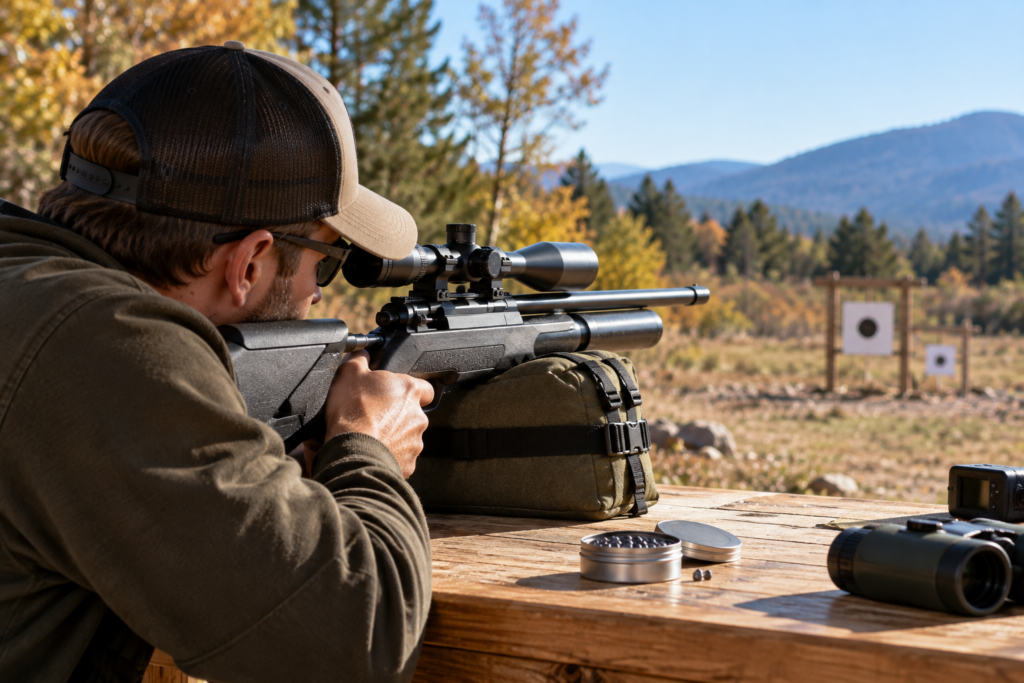
For target shooting, PCP rifles generally have an advantage.
Low recoil, consistent velocity, and adjustable power make them ideal for repeatable shooting.
This is why many serious precision airgun platforms use PCP technology.
However, spring rifles can still be excellent for recreational target shooting.
They also offer the challenge of mastering proper hold technique.
Some shooters enjoy that additional level of difficulty.
PCP vs Spring Air Rifle for High Power
For high-power applications, PCP technology is usually the clear choice.
A PCP system can move a much larger volume of air than most spring-powered systems.
That allows manufacturers to build rifles capable of shooting heavier projectiles at much higher energy levels.
Modern PCP rifles can range from modest target platforms to extremely powerful large-caliber systems.
We explore this side of the category in our High Power PCP Air Rifles guide.
Which One Is Easier to Own?
A spring rifle is easier to own from a logistics perspective.
There is no air tank to refill.
There is no compressor.
There is no pressure gauge to monitor.
You simply cock the rifle, load it, and shoot.
A PCP takes slightly more planning.
You need to make sure you have enough air available.
Once that filling system is in place, however, daily use can actually feel easier than a spring rifle.
The rifle itself requires much less effort between shots.
PCP vs Spring Air Rifle: Quick Comparison
Here is a simple way to compare the two systems.
PCP Air Rifle
Best for shooters who want:
- Low recoil
- High accuracy potential
- Multi-shot magazines
- Fast follow-up shots
- Higher power
- Larger calibers
- Adjustable performance
- Easier shooting
Spring Air Rifle
Best for shooters who want:
- Simplicity
- Lower initial cost
- No external air source
- Minimal equipment
- Independent operation
- Traditional airgun experience
Which One Should You Choose?
The right choice in the PCP vs spring air rifle debate depends on your priorities.
A spring rifle is a great option if you want something simple, self-contained, and affordable.
A PCP is the better fit if you want a smoother shooting experience, more accuracy potential, higher power, and more flexibility.
The biggest trade-off is the filling system.
PCP rifles require compressed air.
Once you have a reliable way to fill them, that disadvantage becomes much smaller.
For shooters who plan to spend more time with airguns, a PCP often provides more room to grow.
For a complete overview of PCP calibers, power systems, filling options, and buying considerations, visit our PCP Air Rifle Guide
Explore PCP Air Rifles
If you’re leaning toward a PCP, our complete PCP Air Rifle Guide explains calibers, filling systems, power levels, regulators, and other important buying considerations.
You can also browse the air rifles available from Palm Beach Airguns to compare PCP rifles across different brands, calibers, power levels, and configurations.
The best choice is not simply about which system is more advanced.
It is about choosing the rifle that matches how you actually want to shoot.